
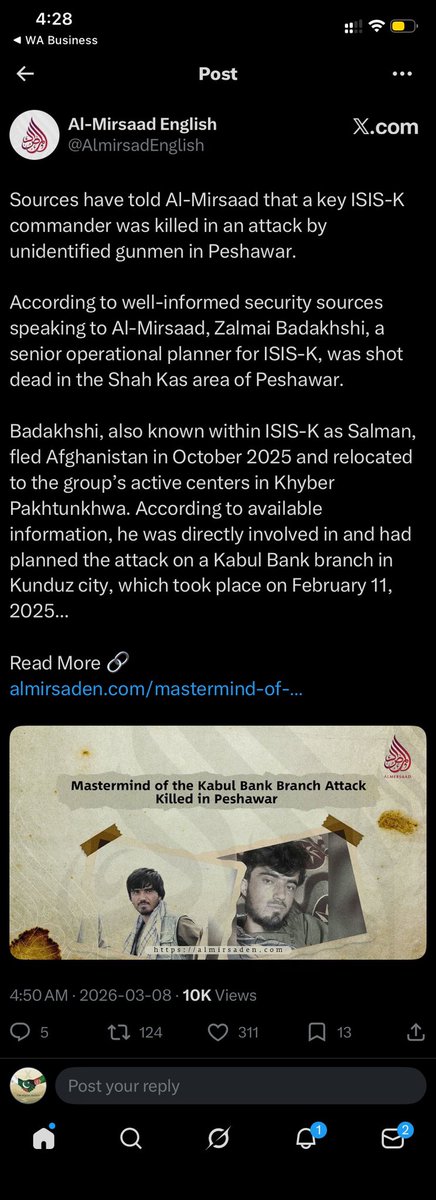
This summary presents the assertions from the provided text: Al-Mirsaad is described not as an independent outlet but as a strategic propaganda arm of the Afghan Taliban, tied to the GDI, operating in an information-warfare gray zone to advance narratives against Pakistan and to shape perceptions before UN Security Council meetings. The piece argues that Al-Mirsaad disseminates claims that ISIS-K operates from Pakistan, framing such allegations as a tactic to deflect scrutiny from Taliban-controlled areas. The text cites independent intelligence and UN reports stating that ISIS-K remains active on Afghan soil, with training centers and support networks in eastern provinces, including Nangarhar and Kunar, and that the Taliban allegedly provides guest houses, freedom of movement, and joint centers to various extremist groups. It also contends that many ISIS-K fighters are former Taliban or TTP members, suggesting a symbiotic rather than purely antagonistic relationship. The description claims that the Taliban’s statements about uprooting ISIS-K are distortions based on fake intelligence from Al-Mirsaad, with real-world consequences such as shifting accountability to Pakistan and fueling border tensions. The text notes the Taliban’s use of high-quality, multilingual content to support its information campaign, and treats Al-Mirsaad as a calculated tool in broader information warfare aimed at obscuring the truth about ISIS-K, TTP, and AQ training networks.


No comments yet. Be the first to comment!